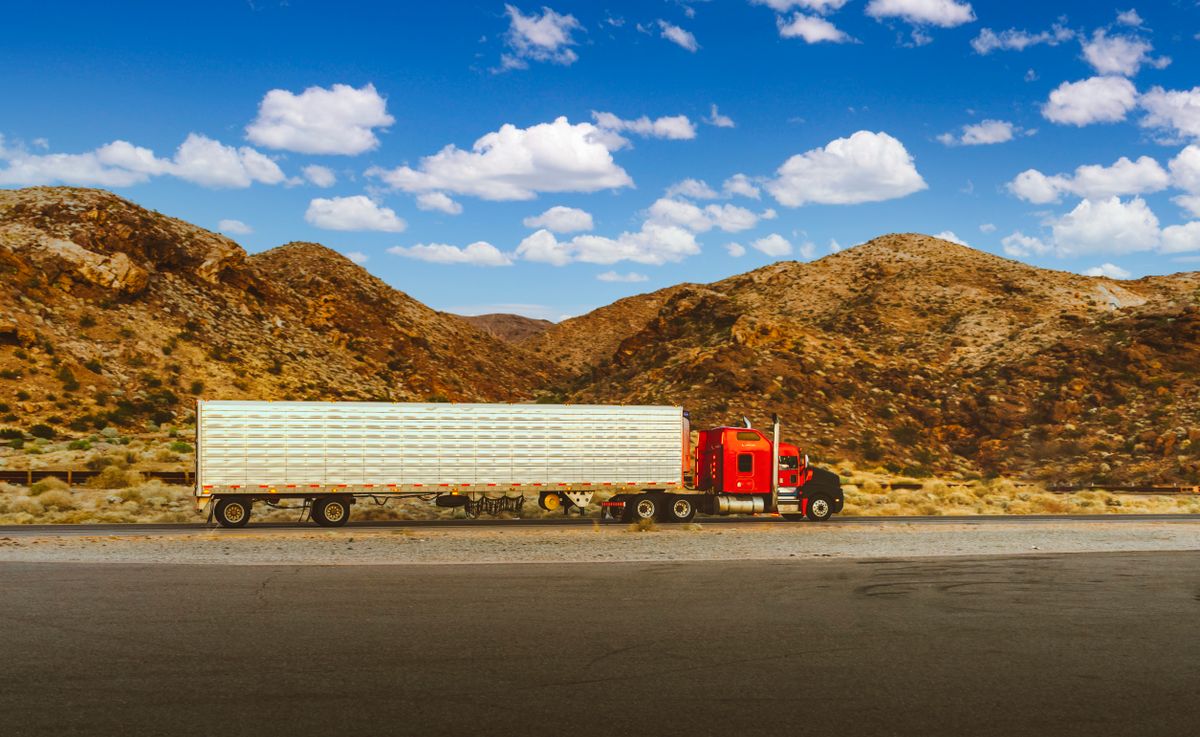
The short answer: Heavy haul — also called over-dimensional freight — is the specialized transport of loads that exceed the legal size or weight limits for a standard truck: machinery, transformers, vessels, structural steel, and prefabricated modules. It takes purpose-built trailers, state permits, planned routes, and often escort vehicles to move the load legally and safely.
What counts as an oversized or overweight load?
A load generally needs special handling once it’s past the legal limits for a standard truck — roughly over 8.5 ft wide, 13.5 ft tall, 53 ft long, or 80,000 lb gross. Beyond those thresholds it needs permits, specialized trailers, and often escorts. The exact limits depend on the route and the states it crosses.
The trailers that make it possible
- Lowboys and RGN trailers — a low deck height for tall, heavy machinery.
- Step-deck and flatbed — versatile decks for oversized but roadable freight.
- Multi-axle and extendable — added axles and length for overweight and long loads.
- Air-ride transport — cushioned hauling for sensitive, high-value equipment.
Permits, routes, and escorts
Every over-dimensional move is won in the planning. A heavy-haul carrier runs an engineered route survey — checking bridges, clearances, and turns — pulls the state over-dimensional and overweight permits, and schedules pilot or police escorts where the route requires them. The largest loads, called superloads, need multi-agency coordination.
How a heavy haul works, step by step
- Assess and route — confirm the load’s dimensions and weight, pick the trailer, and survey the route.
- Permits and escorts — pull the permits and schedule escort vehicles.
- Load and secure — load with crane or forklift, then block, brace, and tie down to engineered standards.
- Transport — haul on the permitted route and schedule, including night or restricted-hour moves.
- Offload and set — offload and, if needed, rig the load into its final position.
Heavy haul FAQ
What’s the difference between oversized and overweight?
Oversized means the load exceeds legal dimensions; overweight means it exceeds axle or gross-weight limits. Many loads are both.
Do I need permits?
Yes — and a heavy-haul carrier handles them for you, along with escorts.
How much does heavy haul cost?
It’s quoted per job — the size and weight of the load, the trailer, distance, permits, and escorts all factor in. Seasonal rates may vary.
How far can you haul?
Across Florida and on long-haul project work beyond it.
Move an oversized load
Get a freight quote or call (561) 683-5000 — send the dimensions, weight, and both locations. Our machinery moving team handles loading at both ends.