The short answer: Riggers match the lifting tool to the load, the site, and the reach. Mobile cranes handle big outdoor picks and height; high-capacity forklifts move heavy loads in tight or indoor spaces; gantries and jacking systems lift and set equipment where no crane can reach. Most jobs use a combination.
Mobile cranes: reach and capacity
When a load is heavy, high, or far from where the truck can park, a mobile or boom-truck crane is the tool. Cranes give the reach to lift over obstacles, set rooftop units, and place steel — with capacity scaled to the pick.
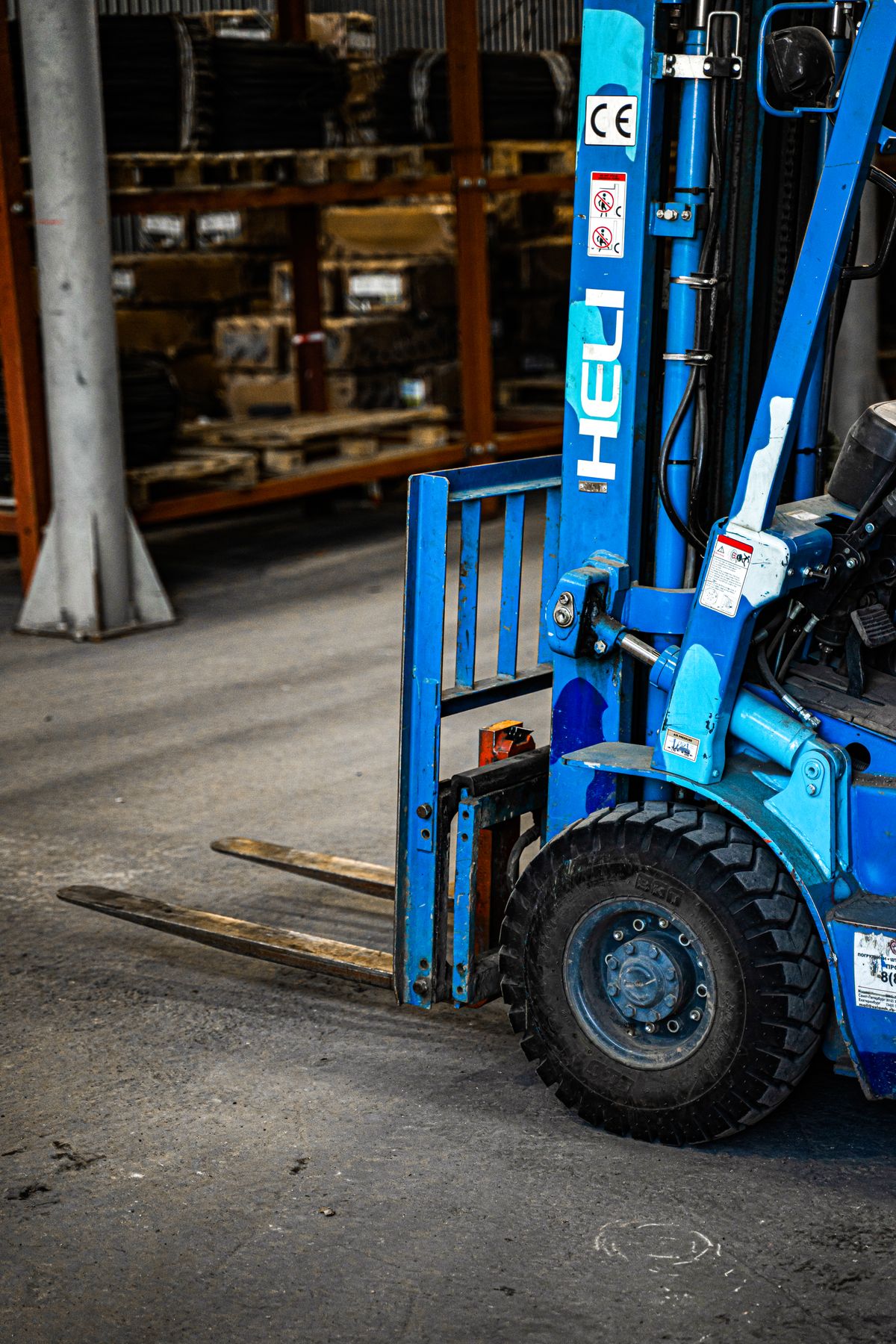
Forklifts: heavy loads, tight spaces
High-capacity forklifts move machinery, crates, and steel inside plants and around yards where a crane can’t set up. They’re fast for load-in and load-out and for repositioning equipment on a floor.
Gantries and jacking: lifting where a crane can’t go
Inside a building with a low ceiling or no crane access, a gantry or a unified jacking system lifts and sets heavy machinery in place — raising, lowering, and translating a load with precision and no overhead crane at all.
How riggers choose — and why the operator matters
The right choice comes down to weight, height, radius, access, and ground conditions. Every lift is engineered before the first pick, and it’s run by a certified operator with a certified signal person — because a dropped or mishandled load is far more expensive than the lift.
Lifting FAQ
How much can you lift?
Capacity scales with the equipment, and for the heaviest sets cranes, gantries, and jacking combine — so it scales to the job.
Can you work indoors or in tight spaces?
Yes — carry-deck cranes, forklifts, gantries, and versa-lifts reach where a mobile crane can’t.
Do you provide the operator?
Yes — every crane and forklift comes with a certified operator.
How much does a lift cost?
Per job — the equipment, weight, radius, site, and time all factor in. Seasonal rates may vary.
Book a lift
Get a quote or call (561) 683-5000. For engineered lifting of the heaviest loads, see industrial rigging.